
Projected vs Actual Release Date
A projected date is an estimate based on the sentence and credits known at that time. NJDOC calls its displayed estimate Current Max Release Date. Current Parole Eligibility Date is a separate Board calculation. A pretrial ECCF detainee does not have a sentence-based maximum date; the court may later order release, detention, dismissal, or another outcome.
County custody follows a different lane. ECCF and the Essex court can identify the release authority and actual custody exit. Do not import state-prison credit rules into an ordinary pretrial county case.
Find Essex Projected Release Dates
Start with the last custodian. Northern State Prison and the four Newark RCRPs use state records even though they are in Essex County. ECCF uses county and court records.
- Confirm the person’s full name, date of birth, SBI or booking number, and case venue.
- For state custody, open the NJDOC Offender Search and accept its disclaimer.
- Match aliases, sentence data, county of commitment, offense, and incarceration history.
- Read Current Max Release Date separately from Current Parole Eligibility Date.
- For ECCF, call 973-274-7826 and review the Essex court order or judgment.
- After the date, verify Date Out-of-Custody, parole, discharge, or any receiving hold.
The NJDOC search screen below comes from the official state portal.
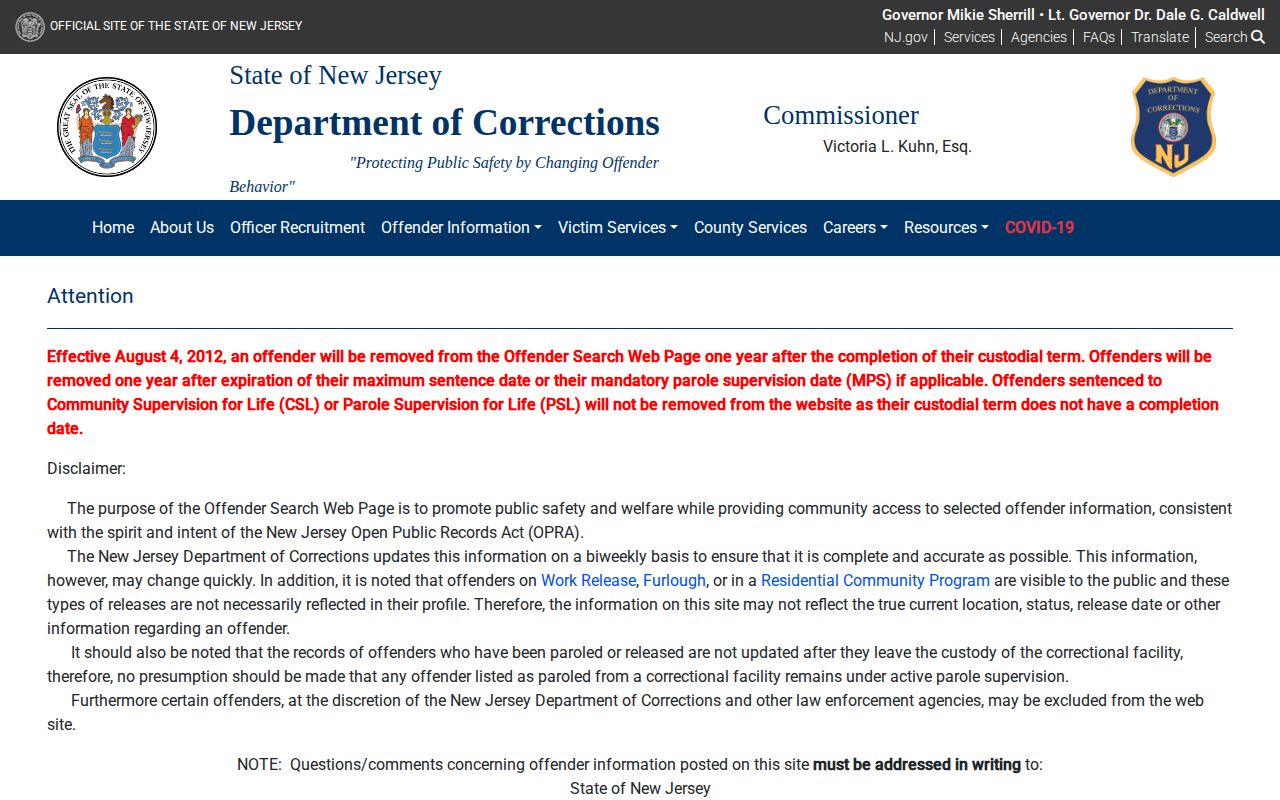
The search is the state-prison lane, not an ECCF booking log. County of Commitment “Essex” usually identifies the trial and sentence venue, not the current facility.
New Jersey Release Credit Calculations
N.J.S.A. 30:4-140 governs commutation or good-time credit. NJSPB describes it as automatically applied but subject to loss for misconduct. N.J.S.A. 30:4-92 provides work credit, generally one day for each five days worked, plus minimum-custody credit of three days per month during the first year and five days per month later. Court-awarded jail credit can also affect the calculation.
The No Early Release Act, N.J.S.A. 2C:43-7.2, requires 85 percent of the imposed sentence before parole eligibility for listed first- and second-degree crimes. It does not apply to every New Jersey sentence. Ordinary credits cannot reduce a statutory or judicial mandatory minimum below its floor.
A state-sentenced person temporarily held in an adult county facility has a specific work-credit rule under N.J.A.C. 10A:9-5.6, beginning on day 16 after sentencing. That rule does not apply to an ordinary pretrial ECCF detainee.
Sentence aggregation and concurrency can also affect the state calculation. A concurrent term runs at the same time as another term, while a consecutive term follows another term. The official record and court judgments control how multiple terms are combined. Do not calculate a date from the longest single charge while ignoring another sentence, a mandatory minimum, restored or forfeited credit, or a later court amendment.
Why a Projected Release Date Changes
NJDOC says Current Max Release Date can change at the end of each month. The calculation reflects days reduced from the sentence and days added for negative institutional conduct. Other legal and custody events can also change the practical date.
| Factor | Possible effect |
|---|---|
| Jail credit | Credits qualifying presentence custody as ordered by the court. |
| Commutation, work, minimum custody | May reduce the calculated state maximum. |
| Discipline | Can forfeit or later restore days. |
| Mandatory minimum | Sets a floor credits cannot pass. |
| Parole decision | Grant, denial, conditions, or rescission affects release. |
| Detainer or warrant | May cause transfer or continued custody elsewhere. |
| Court order | Can amend credits, sentence, or release authority. |
A parole grant can be rescinded before physical release. Eligibility only opens review and does not guarantee approval. For an actual event, look backward to Date Out-of-Custody and the final Board or discharge record.
Confirming a Release Date
New Jersey VINE can report county-jail and state-corrections custody changes. Register on the matching in-custody record by phone, text, email, app, or TTY. Each method is registered separately, and phone or text registration uses a four-digit PIN.
The VINELink Release Check explains the specific-person alert steps. A notification should still be confirmed with ECCF or NJDOC because data can lag and a transfer is not community release.
Essex County Date Records
For an ECCF sentence or pretrial order, the court record explains the legal basis and the jail record gives the actual time custody ended. Ask Essex County for the release authorization, discharge sheet, chronological custody status, release date and time, code, and destination. Another warrant or detainer can prevent community release after one case ends.
No official Essex weekend or holiday early-release rule and no county good-time formula were verified. Use the computation or authorization rather than shifting a date based on assumptions. For a transfer to NJDOC, the new state Date In-Custody and Current Facility establish the next custody lane.
A pretrial ECCF detainee usually has no sentence-based projected release date. The court may order continued detention, pretrial release with conditions, dismissal, or another result as the case develops. A scheduled hearing is not a release date. The Essex court case explains the legal order, and ECCF confirms when that order was carried out. If a person leaves the current jail lookup, call the release-verification line and check the destination before deciding that the person entered the community.
For a short county sentence, use the exact judgment, court-awarded jail credit, and ECCF custody record. Research did not verify a public Essex calculator. It also did not support shifting a date for a weekend or holiday. An agency processing date, another warrant, or a detainer may affect the physical exit even after one term is satisfied.
New Jersey Date Label Difference
The distinctive New Jersey rule is the exact label pair. Current Max Release Date is a monthly changeable calculation. Date Out-of-Custody is the completed-event field. Current Parole Eligibility Date is yet another calculation tied to Board policy and review.
The NJDOC field definitions show these differences.
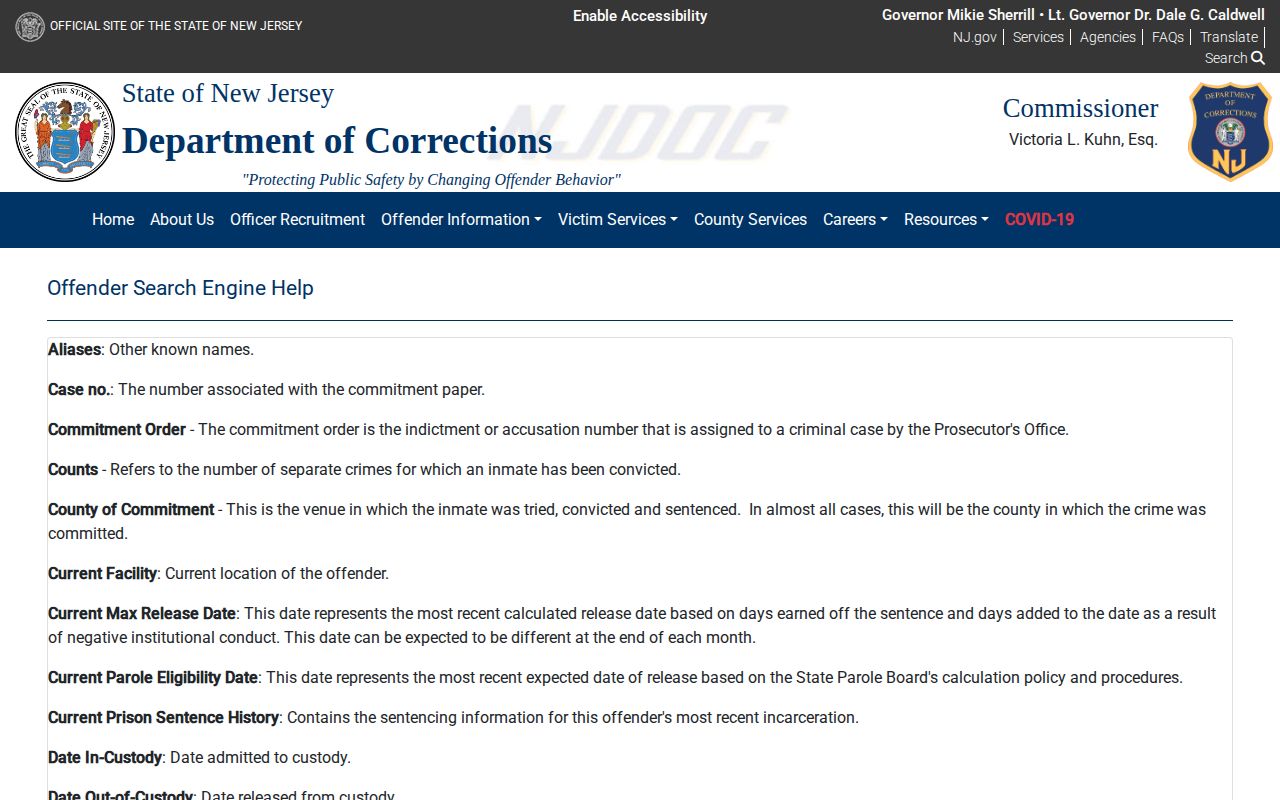
The labels prevent a common mistake: turning eligibility or a forecast into an announced release appointment. Record the label with the date every time.
Essex Parole Date Review
The NJSPB weekly eligibility notice can show the month when a person may first be considered, the comment deadline, and a month through which release may occur. It is not a searchable final-decisions database. Entries can preserve release, revocation, and return-to-custody history, so the most recent event controls.
A panel can grant parole, impose pre-release conditions, deny and set a Future Eligibility Term, refer for an outside-guidelines term, or split and refer the case. New information or discipline may cause rescission before release. Thus a grant and planned date still require Date Out-of-Custody and the final Board record.
For a specific result, contact NJSPB or request the final decision, release certificate, current supervision status, and later discharge. A person released on parole remains under legal supervision even after leaving prison.
Essex Detainers and Date Changes
A detainer is a request or notice from another authority that can affect what happens when one custody basis ends. An ECCF exit to ICE, NJDOC, another county, or federal authorities is a transfer, not community release. The same distinction applies when a state sentence reaches its calculated date but another hold remains.
ICE explains that an immigration detainer asks for advance notice and up to 48 hours of continued custody so ICE can assume custody. It does not prove that pickup occurred. Check both the sending record and ODLS. For a federal path, the BOP locator can show a projected or past release date, but BOP warns that another system may hold the person.
Court warrants and other sentences can also change the practical outcome. Do not remove a hold from the calculation based on rumor. Use the case, warrant, or receiving-agency record.
Essex Completed Release Proof
After the estimated date, rebuild the custody chain. For state prison, look for Date Out-of-Custody and incarceration history. Then determine whether parole follows. For ECCF, request the actual release date, time, code, authorization, and destination. For ICE, recent ODLS coverage lasts 60 days after ICE release.
A court order without a jail timestamp proves authority but not execution. A VINE alert gives timely corroboration but can lag. A destination record may prove that the person remained in custody elsewhere. The strongest finding pairs the sending event, legal basis, and receiving or supervision status.
State the result with its date and source. Current status can change after release through a new arrest, revocation, or detainer. A dated agency finding is more accurate than a timeless claim.
The full Essex County released-inmate search branches by the last known custodian. Use that route when the person changed systems before the estimated date. An NJDOC Current Facility result can show a prison transfer or RCRP placement. ICE ODLS can support immigration custody. A BOP result speaks only to federal Bureau of Prisons custody. Each system has its own date field and coverage limit.
NJSPB can grant release and set a date, impose pre-release conditions, deny release and establish a Future Eligibility Term, or refer a split decision for further review. New information or discipline may cause rescission before the person leaves. Administrative Parole Release can apply to eligible cases through its statutory process, but exclusions and qualification rules remain. For that reason, a hearing notice, favorable panel step, or eligibility date must not be reported as the completed release.
After the expected date, check NJDOC Date Out-of-Custody and request the final Board action when parole is claimed. If the Board later records revocation or return to custody, preserve the earlier release as a dated event while updating the later status. Parole is release from prison into supervision, not the same as final discharge from all correctional authority.
Keep a copy of the dated source and its exact label. A future calculation can change monthly, and another authority can act after one term ends. The sound final statement names the agency, record field, and event date. It does not turn a past release from one custodian into a claim about the person’s location today.
Essex Sentence Terms Defined
Release-date records use terms that describe different parts of a sentence and custody event. Reading each label in its official context prevents an estimate, credit, or eligibility point from being mistaken for the day a person left.
- Maximum term
- The total sentence term before applicable credits and legal changes are considered.
- Mandatory minimum
- A period that cannot be reduced below its legal floor except as law permits.
- Jail credit
- Court-awarded credit for qualifying custody before sentence.
- Commutation credit
- Good-time credit applied under state law and subject to loss.
- Parole eligibility
- The point when review may occur, not a promise of release.
- Date Out-of-Custody
- NJDOC’s retrospective field for the completed state custody exit.
These terms belong to different parts of the calculation. Keep each label with its source. A county pretrial person may have none of the sentence-based fields, while a state prisoner may have several changing dates at once.
Public Record Search
Sponsored Results