
Harbor Program Release Paths
The Harbor Assessment and Treatment Center is an assessment and treatment community placement within the NJDOC Residential Community Reintegration Program network. Education and Health Centers of America operates the Newark location. The program can serve as a stage after secure prison, but a move from prison to The Harbor is not a final release from the state sentence. NJDOC remains the relevant correctional agency until parole or discharge changes that status.
A departure may mark parole into community supervision, maximum-date discharge, transfer to another RCRP, movement back to a secure prison, or another state placement. Physical absence from the building cannot distinguish these outcomes. The NJDOC offender record and custody history show the state lane. Final paperwork identifies discharge. The New Jersey State Parole Board supplies the final parole action and later supervision information.
| Harbor movement | How to verify it |
|---|---|
| Arrival from secure prison | NJDOC Current Facility or incarceration history |
| Parole release | Date Out-of-Custody and final NJSPB action |
| Final discharge | NJDOC final discharge paperwork |
| RCRP transfer | New state placement and facility confirmation |
| Return to prison | NJDOC Current Facility and custody history |
Confirm Harbor Program Releases
Begin with the NJDOC Offender Search. Search by SBI number when known or use the exact name and documented aliases. Compare sentence details, county of commitment, offense, and incarceration history. County of Commitment names the usual prosecution and sentencing venue. It does not turn The Harbor into a county facility.
- Match the NJDOC record with the SBI number, name, sentence, and incarceration period.
- Read Current Facility and Incarceration History for the latest state placement.
- Look for Date Out-of-Custody when a completed state release is claimed.
- Call The Harbor for facility-specific administrative facts about a known placement or departure.
- Check NJSPB if parole was expected or a release appears tied to supervision.
- Request the exact NJDOC discharge, transfer, or custody-history record if the portal remains unclear.
A current maximum release date is a forecast. A parole eligibility date marks possible consideration. Neither proves that the person left. Date Out-of-Custody is the stronger completed-event field, and parole still requires the final Board record.
Harbor Release Contacts
The facility can address its own administrative information, while NJDOC controls the statewide offender and discharge record. NJSPB controls parole decisions and supervision records. Essex County OPRA is not the correct route for an RCRP discharge merely because the program is located in Newark.
The Harbor Assessment and Treatment Center300 Frelinghuysen Avenue
Newark, NJ
Phone: 973-297-1771 NJDOC Central Office
Whittlesey Road, P.O. Box 863
Trenton, NJ 08625
Phone: 609-292-4036 New Jersey State Parole Board
171 Jersey Street, Building 2
P.O. Box 862, Trenton, NJ 08625
Phone: 609-292-4257
Email: SPB-Public-Info-Office@spb.nj.gov
For an NJDOC request, include the person’s name, SBI number, The Harbor placement period, and the exact existing record sought. Useful records may include custody history, transfer documentation, Date Out-of-Custody support, and final discharge paperwork. For parole, seek the final decision, release certificate or date, current supervision status, or discharge from supervision.
Harbor State Release Fields
NJDOC field labels must be read literally. Current Facility can identify the reported state placement. Incarceration History can show periods within the most recent incarceration. Date Out-of-Custody is the date released from NJDOC custody. Current Max Release Date is the latest calculated date based on sentence credits and additions, and NJDOC says it can change monthly.
| State field | What it establishes |
|---|---|
| Current Facility | The reported NJDOC institution or community placement |
| Incarceration History | Periods and movement within the state custody episode |
| Date Out-of-Custody | A completed release from NJDOC custody |
| Current Max Release Date | A calculation that may change |
| Current Parole Eligibility Date | Eligibility timing, not a release decision |
When a person leaves The Harbor for another RCRP, Current Facility or history may change while the sentence remains active. When a person returns to secure prison, the new location is evidence of continued state custody. When Date Out-of-Custody appears, determine whether parole follows before calling the event a full discharge.
Harbor RCRP Release Source
The official NJDOC RCRP list identifies The Harbor among Newark’s state community programs. The successful capture below supports the operator and state-program distinction.
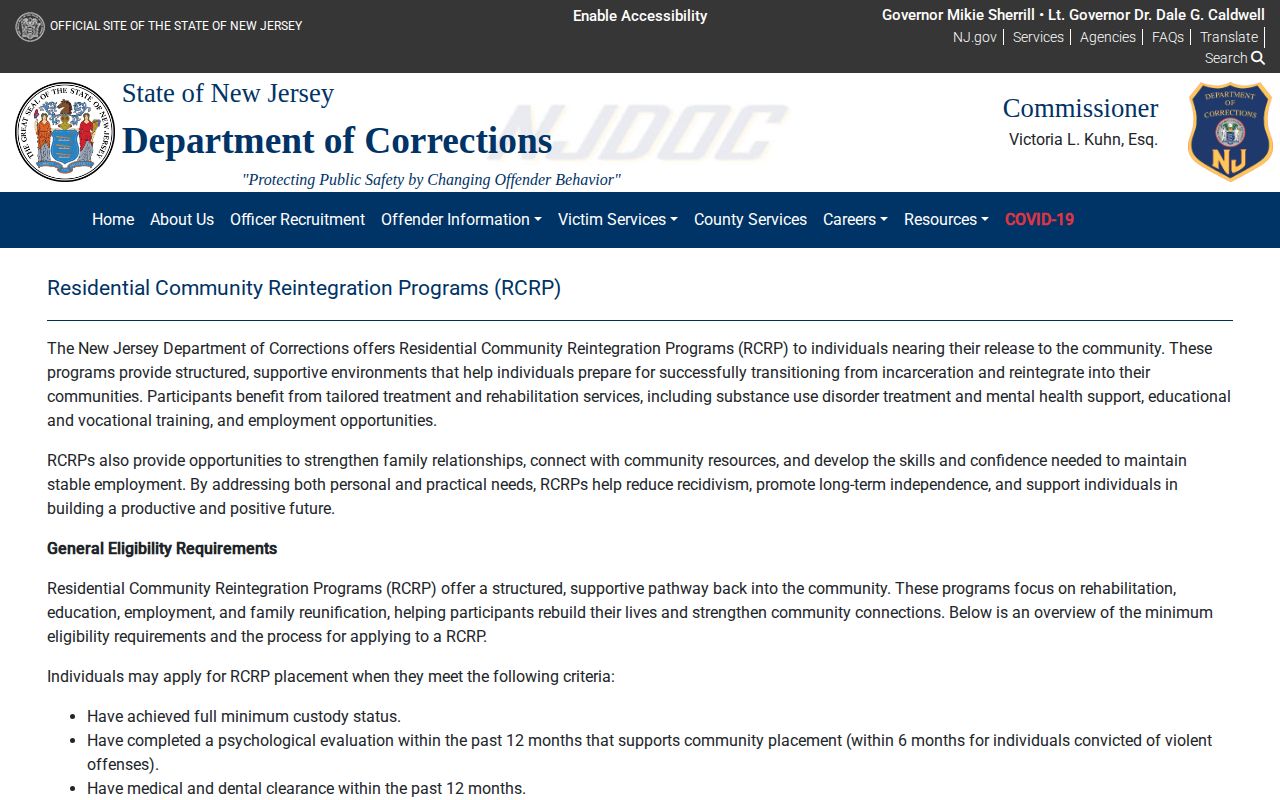
The NJDOC listing is also why a county-jail released archive would be the wrong tool for this facility.
Four mapped Newark RCRPs sit within the state correctional continuum: The Harbor Assessment and Treatment Center, CURA RCRP, Tully House - The Harbor, and Newark - Kintock. Their program functions differ, but movement from any of them should be checked through state records. A street-level absence does not establish final release.
Harbor Placement Versus Discharge
Community placement describes location and program stage. Discharge describes the end of the relevant correctional authority. Parole describes release from prison custody into State Parole Board supervision. Transfer describes movement while another correctional placement continues. These are not interchangeable labels.
- RCRP
- A state residential community program within the sentence structure.
- Parole
- Release under NJSPB conditions after a final Board action.
- Discharge
- The end of the applicable state correctional term shown by final records.
- Return
- Movement back to secure custody, which is not community release.
The weekly NJSPB eligibility notice may help identify a pending parole review, and some entries preserve later event words. It is not a complete released-person archive. An eligibility date can precede denial, deferral, conditions, or rescission. Obtain the final action when the form of release matters.
The NJSPB information route provides the state path for supervision inquiries and Board records after a Harbor release.
Harbor Program Release Records
When the offender portal does not answer the question, use a precise state records request. Ask for a named existing document and a bounded placement period. “Custody history showing departure from The Harbor and the next state placement or Date Out-of-Custody event” is clearer than asking why someone was released. The first request seeks an existing record. The second asks the custodian to research and explain.
A sentencing court record can explain the term, but it may not show the day a placement ended. VINE can report a custody change for New Jersey state facilities, yet it does not replace final NJDOC or parole paperwork. The Essex County released inmate search separates this state-program route from county jail, ICE, and federal searches.
State the source date with any finding. A Harbor placement, discharge, parole status, or later return can change after an online result was saved.
Harbor Discharge Evidence
A strong Harbor finding joins three kinds of evidence. First, NJDOC identifies the state custody episode and reported placement. Second, the departure or final paperwork records whether the person transferred, returned, paroled, or discharged. Third, NJSPB confirms supervision when parole follows. The sentencing court adds legal context but does not replace the agency’s physical custody record. Keep each source in its proper role.
If Current Facility changes from The Harbor to another Newark RCRP, the supported result is a state placement change. If it changes to a secure prison, the person remained or returned to secure custody. If a past Date Out-of-Custody appears, review NJSPB information before calling the event an unconditional discharge. A parole release is a real release from prison custody, but it carries a supervision status that should be stated.
The same caution applies to a VINE event. A reported custody change can support the timeline, yet transfer is not the same as community release. Save the event wording and date, then compare it to NJDOC history. When records conflict, use the newest dated official source and ask the state custodian for the specific missing record. Do not resolve a conflict by treating silence as proof.
Harbor and Newark RCRP Releases
The Harbor shares a local state-program landscape with CURA RCRP, Tully House - The Harbor, and Newark - Kintock. These are distinct facilities and should not be merged into one address or one departure claim. A person may move among programs as NJDOC manages the sentence. That movement can be meaningful progress toward release while still falling short of final discharge.
Use the exact program name from the NJDOC record. If the state history names The Harbor Assessment and Treatment Center, call that facility for its administrative part of the timeline. If the state later names another RCRP, verify that destination. This program-to-program check guards against a common error: seeing that the person left one community address and assuming state jurisdiction ended.
For a documented final release, preserve the Date Out-of-Custody, the type of release shown in final paperwork, and any NJSPB status. That set can distinguish max-out discharge from parole. It also prevents a future maximum date or eligibility date from being reported as an event that already happened.
Public Record Search
Sponsored Results